Cooling comfort tailored to you
Carrier air conditioning systems redefine home comfort
Carrier air conditioning systems
Compare Product Lines
What to look for in an air conditioner
Carrier air conditioning systems are designed to provide your home with consistently cool, comfortable air. Single-stage systems offer basic on-or-off cooling, while two-stage models adapt to conditions by operating in either high or low stage, delivering a more consistent temperature. For the ultimate in luxury, variable-speed systems make tiny adjustments to more precisely control the temperatures and provide consistent comfort throughout your home.
Enhance your home comfort with advanced humidity control. Carrier's variable-speed systems are engineered to run at lower speeds for longer periods, effectively extracting more humidity from the air than two-stage or single-stage systems. By maintaining balanced moisture levels, these high-efficiency air conditioners improve indoor air quality and help create a healthier, more comfortable living space.
Quiet cooling is a hallmark of Carrier air conditioners. Models with variable-speed or multi-stage compressors deliver quieter operation than single-stage models, making them a great fit for homes where peace is a priority. Features like sound blankets and the Silencer System II™ take noise reduction even further.
Energy-efficient air conditioners are rated by their Seasonal Energy Efficiency Ratio (SEER2). The SEER2 rating of an air conditioner is much like miles per gallon (MPG) for a car: The higher the SEER2 rating, the more energy efficient the system. Carrier offers AC units with SEER2 ratings as high as 21, which can help save you money on cooling bills while minimizing environmental impact.
HVAC systems, like AC units, can typically last 15-20 years with proper maintenance. Usage patterns, climate conditions, installation quality, and regular upkeep all play a crucial role in their longevity. For more details, visit Carrier's guide on air conditioner lifespan.
The size and layout of your home are critical factors in determining the right AC unit size. An oversized unit can lead to short cycling, poor humidity control, and higher energy bills, while an undersized unit may struggle to reach the desired temperature, running excessively and wearing out faster. Proper sizing ensures optimal comfort, efficiency, and system longevity.
Including a higher-grade filtration system (MERV 10-15) as part of your AC setup can help improve indoor air quality. Additionally, maintaining proper humidity control not only enhances comfort but also helps create a healthier living environment. Together, these features ensure your home feels fresher, cleaner, and comfortable year-round.
Learn more about air conditioners

Why Carrier
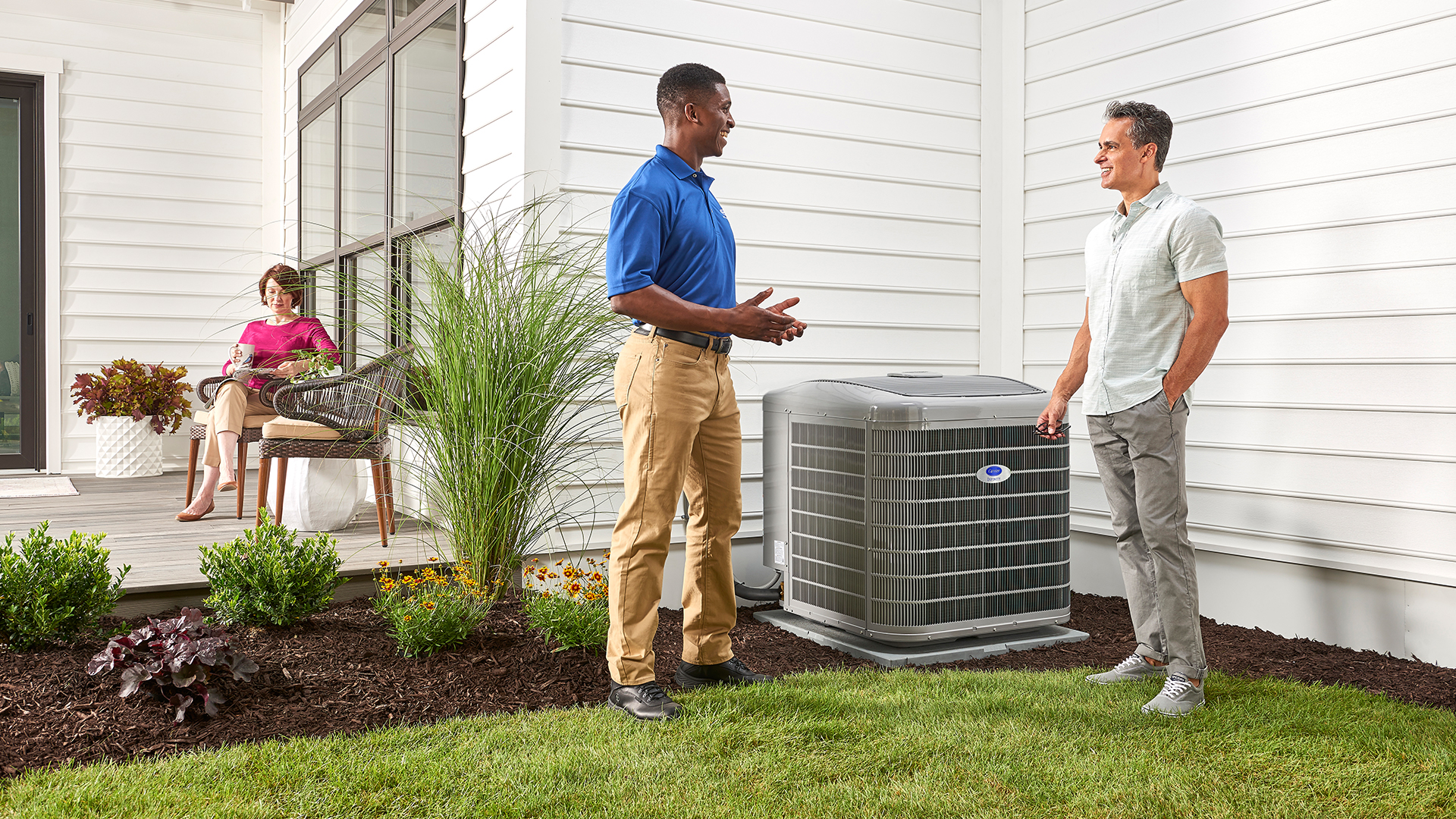
At Carrier, we take pride in being the inventors of modern air conditioning, thanks to Willis Carrier’s groundbreaking innovation over 100 years ago. Our focus on premium, innovative air conditioner systems and our established network of trusted dealers ensure you get the quality and reliability you deserve. We’re dedicated to providing reliable solutions for your home comfort needs.
Frequently asked questions about air conditioners
Air conditioning is a process that involves the removal of heat and humidity from indoor air to provide a cooler and more comfortable environment. Learn more about how does air conditioning work.
We know that not every house is the same. That’s why we offer a variety of different types of Carrier air conditioners to meet the needs of your unique home. Our central air conditioning systems include an air conditioner and an indoor unit with an AC evaporator coil, typically installed in a utility closet, basement, or attic. The blower fan of the indoor unit will distribute conditioned air throughout the home through ductwork within the walls of your home. In some climates, people will select heat pumps for the outdoor unit and pair them with indoor air handlers because they can also provide electric heating which is ideal for some regions.
Carrier also offers ductless mini splits which are flexible cooling solutions that doesn’t require ductwork. Mini splits are also an energy efficient option and don’t obstruct a window, unlike a bulky window air conditioner.
Air conditioners are available in a variety of capacities, typically ranging from 1.5 tons to 5 tons. The size and layout of your home play a crucial role in determining the appropriate unit size. Whether your home is 2,000 square feet or exceeds 5,000 square feet, there is a suitable air conditioning solution for most every situation. To ensure you select the right size air conditioner for your home, we recommend scheduling a consultation with a local Carrier expert.
Regardless of your situation, you can have confidence that Carrier has an AC system that can meet your home comfort needs.
There are two main types of air conditioner systems: central split systems and mini split systems. Central split systems use ductwork to distribute cool air throughout the home. Mini split systems are ductless, providing flexible cooling without the need for ducts. Both options deliver efficient and reliable cooling.
A BTU, or British Thermal Unit, is a measure of energy that indicates how much heat an air conditioner can remove from a space in one hour. It’s a key factor in determining the cooling capacity of an AC unit. Learn more at Carrier's guide to BTUs.
When purchasing a new AC system, the refrigerant is typically pre-determined by the manufacturer to comply with the Environmental Protection Agency’s (EPA) Global Warming Potential (GWP) limits. Modern systems are designed to use environmentally responsible refrigerants. Learn more at Carrier's guide to AC refrigerants.
you need abc
i need xx