Single Stage vs. Two Stage vs. Variable Speed AC
By Ryan Mayes
Choosing the perfect cooling system for your home requires looking past the outer cabinet. Selecting the right unit depends on understanding more than just air conditioner size. You also need to understand the technology powering the compressor inside. The compressor acts as the heart of your cooling system, and its design dictates your daily comfort, energy usage, and long-term savings.
When you upgrade to advanced compressor technology, like variable-speed systems, you unlock significantly more energy efficiency. These modern units precisely match your home's cooling demand. They operate longer at lower speeds, which dramatically reduces temperature swings and keeps your indoor climate perfectly balanced.
Quick Comparison: Single-Stage vs. Two-Stage vs. Variable Speed
We want to help you make a confident, educated decision. Review this quick comparison table to understand how these three primary compressor types stack up against each other.
| Feature | Single-Stage AC | Two-Stage AC | Variable-Speed AC |
| Main Benefit | Lowest upfront cost | Balanced price & comfort | More precise comfort & long-term savings |
| Operation | 100% On or Off | High (100%) / Low (~65%) | Modulates (30%–100%) |
| Efficiency | Standard SEER2 | High SEER2 | Highest SEER2 |
| Humidity Control | Standard | Enhanced | Premium (Up to 400% more humidity removal1) |
| Upfront AC Cost | $ | $$ | $$$ |
Single-Stage AC: Simple, Cost-Effective, and Reliable
How It Works
Think of a single-stage compressor like a standard light switch. It only has two modes: entirely on or completely off. When your thermostat detects that the indoor temperature has risen above your setting, the single-stage system kicks on at 100% capacity. It blasts cold air into your home until the target temperature is reached, and then it shuts off completely.
Key Benefit: Low Upfront Cost
The most significant advantage of a single-stage system is the low initial AC cost. Because the technology is simpler, the equipment and replacement costs remain highly accessible. Carrier's Comfort Series models feature dependable single-stage HVAC units that deliver reliable cooling when you need it most.
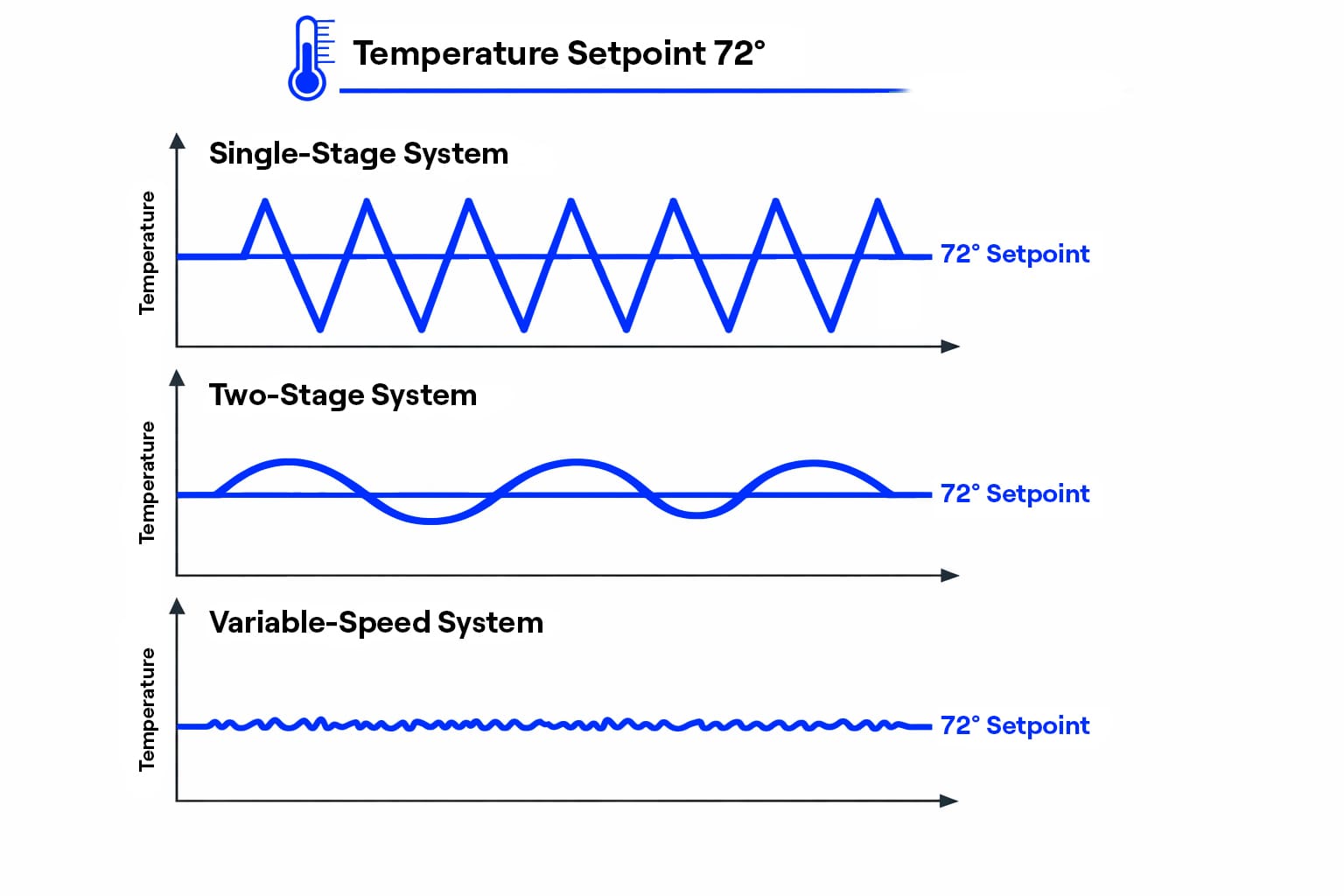
However, this on-or-off operation can create noticeable temperature swings. The system only kicks on after the temperature rises above your set point, then runs at full blast until it cools below that point before shutting off again. This frequent cycling can cause fluctuations in comfort as your home temperature drifts up and down.
Two-Stage AC: Middle Ground for Enhanced Comfort
How It Works
Unlike the light switch analogy, a two-stage compressor operates more like a switch with two distinct settings: high and low. The high stage runs at 100% capacity for extreme summer heat. The low stage operates at roughly 65% capacity. For the vast majority of the cooling season, the system stays in the low stage. It runs for longer periods at this lower speed, saving energy while maintaining a steady temperature.
Key Benefits: Quieter Operation and Better Dehumidification
A two-stage system spends most of its time operating at a lower, quieter speed. Furthermore, these longer run times allow the system to pull significantly more moisture out of the air. Better dehumidification means your home feels cooler at higher temperatures, allowing you to save money on your energy bills. Many of Carrier's Performance Series models utilize this two-stage technology to enhance your everyday comfort.
Variable-Speed AC: Premium Efficiency and Precise Control
How It Works
A variable-speed compressor functions like a dimmer switch. Instead of locking into one or two speeds, it modulates its output in 1% increments, operating anywhere from 30% to 100% capacity. The system constantly monitors the conditions inside and outside your home. It then adjusts its speed to precisely match the exact cooling demand of the moment, maintaining your desired temperature within a fraction of a degree.
Key Benefits: Premium Humidity Control and Long-term Savings
While the initial installation cost is higher, variable-speed technology offers the higher long-term return on investment (ROI). Because they operate at the exact speed needed, these systems achieve far greater efficiency ratings than single- and two-stage systems. They also provide premium humidity control, removing up to 400% more moisture than standard systems in worst-case conditions. Carrier’s Greenspeed® Intelligence delivers visionary performance and remarkable energy savings in this category.
How to Choose the Best System for Your Home
How do you choose the right system? It comes down to your environment, budget, and comfort priorities.
In hot, humid climates where the AC runs constantly, high-efficiency systems like variable-speed units often provide the better return on investment. If you live in a milder climate, a dependable single- or two-stage unit might be a better financial choice. But savings aren't the only factor. If you prioritize consistent comfort and minimizing temperature fluctuations, a two-stage or variable-speed system is worth considering.
Think about your timeline and home size as well. If you plan to stay in your home long-term, the monthly energy savings from a premium system can help offset the initial investment.
Why Use Professional AC Installation
No matter which technology you choose, the equipment is only as good as the team installing it. Even the most advanced variable-speed system will struggle to perform if it is sized incorrectly or installed poorly. Proper airflow calculations, ductwork inspections, and precise refrigerant charging are non-negotiable. That is why expert AC installation remains the most critical step in maximizing your new system's lifespan and efficiency.
Find a Dealer