HVAC System Rental: Complete Guide for Commercial & Industrial Use
Every industry faces moments if it’s a new space, the new system isn't installed yet, or a project just needs more capacity than what's already on-site. That's usually when businesses start looking at HVAC rental. It's a practical way for commercial and industrial operations to get reliable temperature control fast, without committing to buying permanent equipment they might not need long-term. This guide covers the basics of HVAC system rental, when businesses actually reach for it, what equipment is available, and what to think through before signing a rental agreement.
What Is HVAC System Rental?
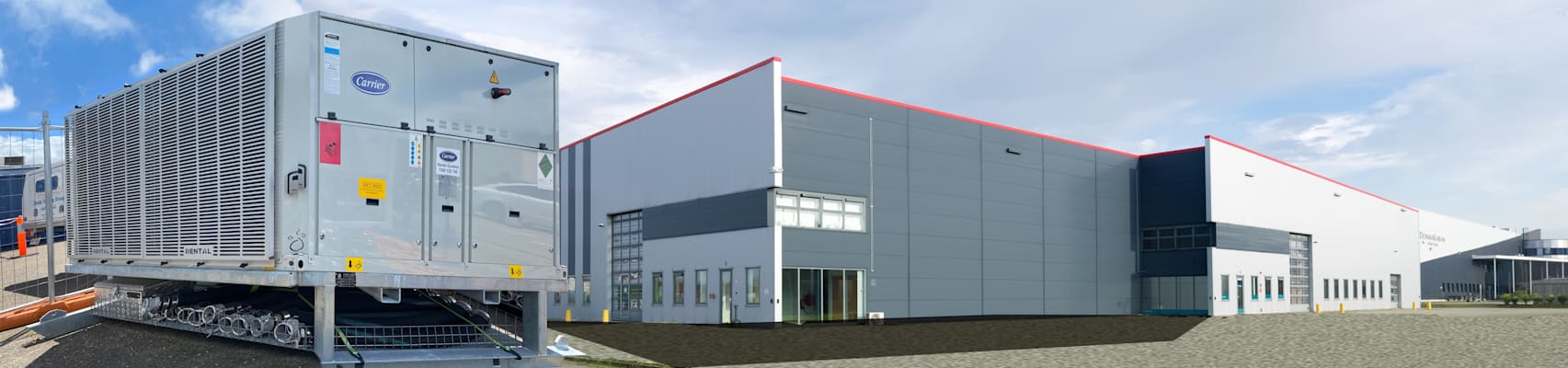
Put simply, HVAC system rental means using heating, ventilation, and air conditioning equipment on a temporary basis, for however long an organization needs it. Rather than buying and installing something permanent, a business can lease chillers or ducted units for the length of a project, a busy season, or until a broken system gets fixed. This shows up across commercial and industrial operations, including manufacturing facilities, data centers, healthcare institutions, event venues, and other environments where temporary climate control is required. Carrier India's rental offering, for instance, is built around flexible, cost-effective temporary cooling for exactly these situations events, temporary operations, and emergencies with plug-and-play rental chillers that arrive housed in a fabricated structure with pre-attached cables and hoses, so installation is quick and hassle-free rather than something companies have to figure out on the fly.
Why Businesses Choose HVAC System Rentals
Temporary Cooling and Heating Requirements Plenty of commercial and industrial operations run into climate control needs that don't really justify a permanent system. Temporary operations, facility upgrades, or renovation projects are a classic example; they'll often need temporary hvac rental just to keep things workable on-site until the permanent equipment is up and running. Facilities dealing with renovation, expansion, or a seasonal jump in load face something similar. Renting lets them fill that gap without derailing whatever's already in motion.
Emergency Backup Solutions An equipment failure out of nowhere can seriously disrupt business continuity, and that's especially true in temperature-sensitive settings like healthcare facilities, data centers, and food processing plants. Carrier's rental support is built around exactly this kind of scenario, alongside planned shutdowns where equipment needs to come offline temporarily for maintenance without disrupting operations.
- Cost-Effective Short-Term Usage: Buying a full HVAC system for something short-term or project-based rarely makes financial sense; the capital outlay just isn't worth it. Renting lets businesses get the cooling or heating capacity they need without carrying the costs of ownership: maintenance over the years, eventual disposal, the whole picture. That's especially useful for organizations dealing with demand that shifts across different sites or seasons, where a portable commercial air conditioner rental gives them the flexibility to scale up or down as things change.
- Special Events and Supplemental Capacity: Beyond construction and emergencies, rentals are also a go-to for special events that need short-term cooling in venues without a permanent system, and for facilities that simply need to supplement existing equipment during peak load periods rather than invest in additional permanent capacity.
Types of HVAC Systems Available for Rental
Air-cooled rentals are a common choice for facilities needing serious cooling capacity without the water infrastructure a water-cooled system requires. Carrier's plug-and-play air-cooled rental chillers come pre-configured in a fabricated structure, making setup faster for temporary operations, facility upgrades, and other short-term installations.
- Water-Cooled Chillers: Water-cooled chiller rentals suit larger commercial and industrial facilities with heavy process cooling needs, offering high capacity in a compact footprint compared to air-cooled equivalents.
- Ducted Air Conditioning: Ducted rental units distribute conditioned air through existing or temporary ductwork, making them a practical fit for commercial buildings and facilities that need whole-space climate control rather than cooling limited to a single area.
Conclusion
Renting HVAC systems is an efficient approach for companies to manage temperature regulation across temporary operational requirements, equipment breakdowns, and periods of increased seasonal demand. Carrier India's rental range air-cooled chillers, water-cooled chillers, and ducted air conditioning is built to fit these needs without the expense of purchasing new equipment. Planning ahead and determining cooling requirements, rental period, and existing infrastructure will make the difference in ensuring proper operation of the system.
FAQs
Under what circumstances do companies use HVAC system rentals?
Companies can choose to rent an HVAC system during temporary operational requirements, facility upgrades, peak seasons, equipment failures, special events, and planned shutdowns, wherever temporary climate control is needed.
What kind of HVAC systems can be rented out?
Options typically include air-cooled chillers, water-cooled chillers, and ducted air conditioning units, suited to a range of commercial and industrial applications.